
Nationwide Final Expense has helped Central Texas seniors compare funeral funding options since 1963. With over 1,000,000 active policyholders and an A.M. Best “A-” (Excellent) rating, we provide final expense life insurance and preneed guidance that families across Austin rely on.
Choosing the right funding option protects your loved ones from unexpected funeral costs.
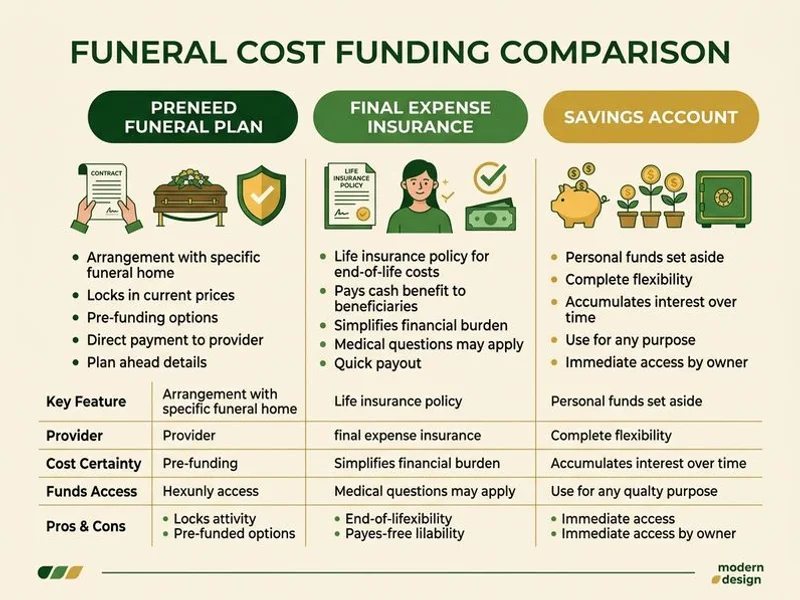
Comparing preneed vs. final expense funding is a big step for Central Texas families in Austin, Pflugerville, Round Rock, and beyond. A preneed contract lets you prepay an Austin funeral home and lock in the current prices for the services covered in the agreement. A final expense policy works differently - it provides a simplified issue whole life insurance plan that pays unrestricted cash directly to your beneficiary.
Both prepare for the same costs, but they behave very differently when the moment arrives. This page walks you through how each one works so you can make a confident decision.
How Preneed Funeral Contracts Work in Texas
Preneed contracts in Texas are written directly between you and a specific funeral home. The state regulates these agreements under the oversight of the Texas Department of Banking and the Texas Finance Code Chapter 154. This oversight adds strong consumer protections, including strict trust-funding rules that require the funeral home to deposit a percentage of prepaid funds into a regulated trust account.
What the contract usually covers includes the physical merchandise like a casket and basic services like transport. You lock in the price of the items written into the contract at today’s rates. This inflation-proof rate lock is the primary appeal of a preneed arrangement.
Paying today’s price for a service that happens years from now is a practical financial strategy. The 2026 data from the National Funeral Directors Association shows that a basic services fee alone now averages $2,190 in the US. Securing this specific rate through a Funeral Purchase Agreement can save your family a significant amount of money over time.
What preneed contracts often leave out
It is vital to understand exactly what your agreement does not cover. Changing your mind or adding services later can expose your family to unexpected retail prices. Families frequently face surprise bills for several specific items not included in the contract.
Here are the most common expenses not locked into a standard preneed contract:
- Upgraded merchandise: Choosing a different casket or a nicer urn later will cost you the current market rate.
- Additional services: Extra viewing days or special memorial gatherings are billed at future prices.
- Cash advance items: Third-party costs like obituaries, certified death certificates, and police escorts are rarely guaranteed.
- Travel expenses: Out-of-town transport requires extra out-of-pocket cash.
Asking the funeral director for a clear list of non-guaranteed cash advance items is a practical first step. Review your contract line by line to identify any unprotected costs before you sign.
Final Expense Pays Cash to Your Beneficiary
A final expense policy works in a completely different way. It is a small whole life insurance policy with a face amount typically between $5,000 and $35,000. When you pass away, the carrier pays cash directly to your beneficiary.
The beneficiary files a simple claim, and Nationwide Final Expense pays approved claims within 24 hours. This cash is completely unrestricted and ready to use immediately. The money can go to a funeral home, but it does not have to go to any particular facility.
Insider Tip: Because final expense policies pay cash directly to your family, the funds are protected from funeral home price markups. Your beneficiary can easily shop around for the best value at the time of need.
The same cash can pay for the funeral, a cremation, memorial services, or outstanding medical bills. Any leftover money passes directly to the beneficiary as a legacy. We cover the underlying coverage in detail on the guaranteed acceptance burial insurance page.
Flexibility is the practical difference for families that might move or downsize in retirement. You might change your mind about which Austin-area funeral home you want to use. Comparing the two funding choices side by side reveals which features matter most to your situation.
Comparing your funding choices
A clear breakdown helps highlight the specific strengths of each option. The right choice depends on whether you value a locked price or total flexibility.
| Feature | Preneed Contract | Final Expense Policy |
|---|---|---|
| Price Protection | Locks in current rates for listed items. | Pays a fixed cash amount, regardless of future prices. |
| Flexibility | Tied to one specific funeral home. | Cash can be used anywhere, for any expense. |
| Average 2026 Cost | Usually paid in a lump sum or installments based on a $7,000 to $10,000 total. | Roughly $50 to $74 per month for a $10,000 policy at age 65. |
| Leftover Funds | Rarely yields any leftover money. | Remaining cash stays with your beneficiary. |
Seeing the numbers makes the decision easier for seniors on a fixed income. A 2026 industry study showed the average cost of a $10,000 final expense policy is about $50 to $74 per month for applicants over 60. This predictable monthly rate works well for fixed budgets because the premium never increases.
Which Funding Option Fits Your Situation?
A preneed contract is most useful when you have a clear, fixed plan at a specific funeral home. You must be committed to using that facility and unlikely to move away from Central Texas. The locked pricing on the specific services is the main advantage.
Removing the price inflation risk for those selected merchandise items brings real financial protection. The median cost of a traditional burial with a vault hit $9,995 in 2026 national data. Preneed plans ensure those high-ticket items are fully covered in advance at today’s rates.
Common Pitfall: Over 20% of Americans move during retirement. Transferring a preneed contract to a new city often means losing the price-lock guarantee and paying extra administrative fees.
A final expense policy is the better default choice for almost everyone else. It travels safely with you across state lines if you relocate near family. The cash benefit does not depend on a single funeral home staying open or honoring an old contract.
The cash benefit absorbs the extra costs a preneed contract typically leaves out. Outstanding medical bills, travel expenses for grieving relatives, and a memorial gathering are all covered. This immediate cash gives families the breathing room to grieve without financial pressure.
The growing trend of cremation
Cremation is becoming the preferred choice for many seniors due to its lower cost and simplicity. The 2026 national data from the Cremation Association of North America reveals that a direct cremation averages just $1,945. A final expense policy pairs well with this option because it leaves room in the benefit for other costs.
Using a small insurance policy for a direct cremation leaves a generous amount of cash leftover. Your beneficiary can use that remaining money to host a personalized celebration of life at a favorite local restaurant or park. This approach offers a practical mix of affordability and meaningful remembrance.
Pairing a Prepaid Funeral Plan With a Cash Policy
Some Central Texas families strategically decide to use both funding methods. They buy a preneed contract for one specific local home to cover the basic cremation plus a small whole life insurance policy for flexibility. Families in Georgetown, Cedar Park, and Leander often build this exact type of blended safety net.
You might set up a $3,000 preneed agreement to lock in the cremation rate at an Austin facility. Then, you secure a $5,000 final expense policy to handle travel costs or sudden medical copays. This combined strategy addresses both the price-lock and flexibility sides of the preneed vs. final expense funding question.
If you would like to talk through your specific situation, call (800) 930-7459. There is no obligation to buy anything today. A Nationwide Final Expense licensed advisor will give you a plain, honest comparison - no high-pressure sales tactics.
Helping Central Texas Families Choose
We compare funding options with families throughout the region, including Austin, Round Rock, Hutto, and communities across Travis, Williamson, and Hays counties. When county aid is part of the picture, we also explain how Travis County burial assistance, Williamson County burial assistance, and Hays County burial assistance fit alongside preneed and final expense funding.