
what to expect
What to Do When a Loved One Dies in Austin, TX
A clear first-72-hours checklist for Austin families covering death certificates, veteran benefits, transport, and where to get immediate help.
Updated June 25, 2026 · 7 min read
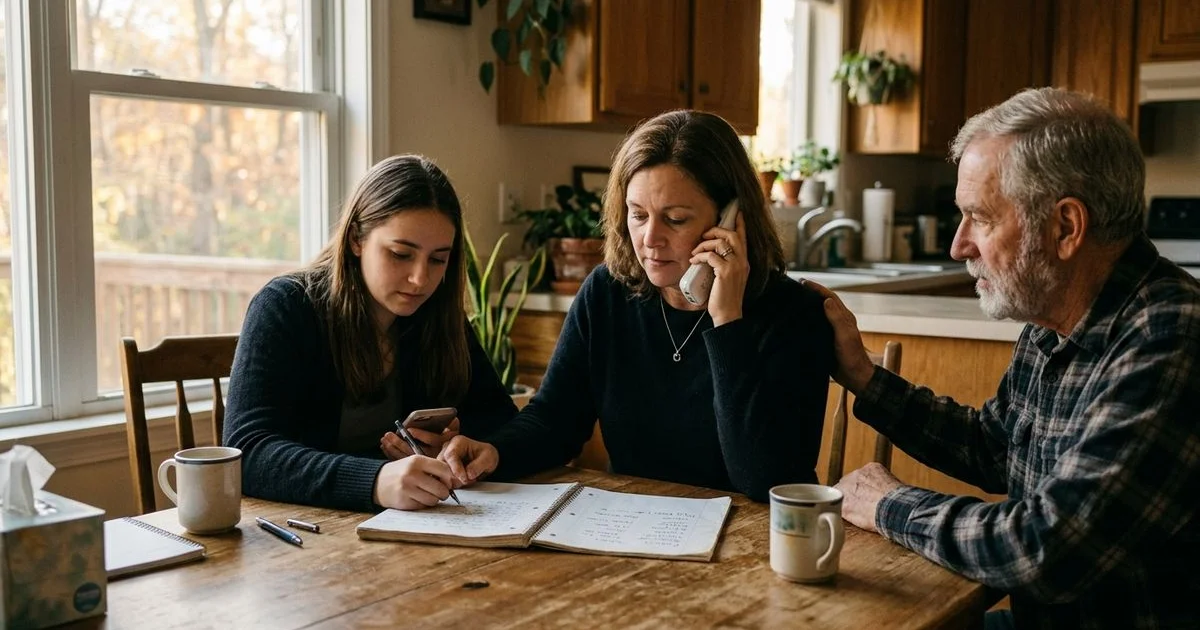
We see the same challenge with almost every family we help in Central Texas. Making fast decisions about what to do when someone dies in austin while under heavy emotional distress creates a massive burden. Our team at Nationwide Final Expense was founded with a simple mission to provide exceptional final expense life insurance services that customers can truly rely on.
The initial shock of a loss leaves very little room for complicated planning.
This quick guide outlines the practical steps required right away. We will walk through the exact timeline of what to do after death texas laws mandate. You can then focus your energy on supporting your family.
The first 24 hours
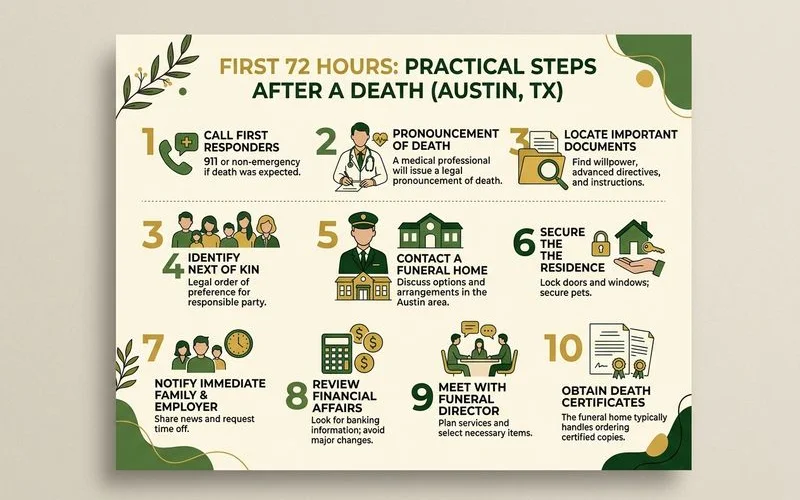
The first hours are the hardest because everything feels urgent and nothing is rehearsed. Knowing exactly what to do when someone dies in austin starts with making the right phone calls.
Here is a simple breakdown of who to call first depending on the situation:
- At home without hospice: Dial 911 immediately so first responders from the Austin Police Department or emergency medical services can arrive.
- At home with hospice: Contact the hospice care nurse directly.
- At a hospital or facility: Notify the attending nurse or floor staff, as they will manage the immediate steps for you.
Our local experience shows that sudden or unnatural deaths require a different process. The Travis County Medical Examiner’s Office, located on Springdale Road, will be notified in these specific situations. The medical examiner handles the official investigation and transport of the deceased. If the death is natural, law enforcement will try to contact the person’s primary care physician. The doctor can sign the death certificate so the chosen funeral home can arrange transport.
After the official pronouncement, your next call is to the funeral home. We highly recommend utilizing any existing support systems right away. If you have a Funeral Planning Assistance membership through a Funeral Advantage policy, this is the call that matters most. Your Personal Funeral Advisor can take over price comparisons, handle calls to local funeral homes, and review complicated contracts. This specific service removes a huge amount of weight from the family in the first 24 hours.
Day 2: Death certificate and notifications
The funeral home orders the initial certified austin death certificate through the state vital statistics office. You can also order them directly from the City of Austin Office of Vital Records for deaths within city limits. Texas law sets the cost of the first certified copy at exactly $20. Each additional copy ordered at the same time costs only $3.
We strongly advise ordering plenty of extra copies right away. Most families need anywhere from 5 to 10 copies for various legal and financial closings. The $3 price for extra copies makes it highly cost-effective to buy them in bulk. You will need these official documents to close or transfer the following accounts:
- Social Security Administration: Required to stop current benefits and apply for the $255 lump-sum death payment if eligible.
- Life insurance and burial insurance carriers: Every single policy that pays out requires a certified copy.
- Banks and brokerage accounts: Needed for executing transfer-on-death paperwork.
- Pension or annuity providers: Necessary to update beneficiary payouts.
- Mortgage and utility accounts: Required to close or transfer bills in the decedent’s name.
- Probate filings: The court needs proof of passing to open an estate.
Our probate process in Central Texas is highly structured. For Austin-area families, Travis County Probate Court No. 1 and No. 2 handle most estate filings. These courts are located downtown at 200 W. 8th Street. The funeral home and your advisor can walk you through exactly who needs notifying first.
Day 3 and onward: Service planning
By day three, the funeral service becomes the primary focus. Decisions made in this brief window dictate whether families save thousands of dollars or severely overspend. A 2026 industry report indicates that a traditional funeral with a viewing in the Austin area averages between $8,500 and $11,500. A direct cremation is much more affordable, averaging closer to $2,100 to $2,400 locally.
We urge families to compare prices carefully. Federal Funeral Rule rights require every single funeral home to provide a General Price List upon request. You should gather these lists from at least two Austin-area funeral homes before signing any contracts.
Our team knows how stressful comparing these costs can be. This is exactly what a Personal Funeral Advisor does for members at no extra cost. They pull price lists from up to three local homes to build a clear comparison. The advisor lines up the differences and flags unnecessary upsells before you sign a binding agreement.
For veterans
If your loved one served in the U.S. armed forces, they may qualify for a VA burial allowance, a grave at a national cemetery, a military headstone, and a flag for the casket. Families in Austin often utilize the Central Texas State Veterans Cemetery in Killeen or Fort Sam Houston in San Antonio. The funeral home files the required paperwork. Have the DD-214 discharge documentation ready when you meet with the director.
Cash flow in the first week
Funeral home deposits are usually required upfront before any services begin. Many funeral homes in Travis County ask for 50% to 100% of the total bill at the time of arrangement. This sudden expense is where grieving families feel the most financial pressure.
We designed the Funeral Advantage policy specifically to solve this cash flow problem. Approved claims are paid in just 24 hours, in cash, directly to the designated beneficiary. This cash payout is completely unrestricted. You can use the funds for the initial deposit, the remainder of the funeral service, or any other immediate family needs.
Our goal is to ensure you never feel trapped by sudden expenses. If your family member did not have a policy in place, managing a funeral on a tight timeline requires finding alternatives fast. The comprehensive guide on how to pay for a funeral with no money walks through practical local options. You can explore county aid programs, payment plans, affordable direct cremation, and community crowdfunding. Let’s break the options down into a small table for clarity.
| Funding Option | Best For | Speed of Funds |
|---|---|---|
| Funeral Advantage Policy | Immediate cash for deposits and full services | 24 hours upon claim approval |
| Payment Plans | Spreading costs over several months | Arranged upfront at signing |
| County Aid Programs | Families with strictly limited financial means | Varies by county processing time |
| Crowdfunding | Tapping into community support networks | Usually takes several days or weeks |
Going forward
After the immediate logistics are finally handled, many family members reach the exact same conclusion. They decide they never want to put their own children through this stressful process.
We hear this sentiment from clients across Texas every single day. Reviewing what to do when someone dies in austin often inspires people to plan ahead. A small final expense policy is the most reliable standard answer.
If that is where you are now, take a few minutes to learn more about burial insurance options. You can also call (800) 930-7459 for a fast, free quote. There is no medical exam required, and most callers qualify in the exact same conversation.
Frequently Asked Questions
Who do I call first when a loved one dies in Austin?
How do I get a death certificate in Texas?
What veteran benefits apply at death?
Related Guides
How Much Does a Funeral Cost in Texas? (2026)
Real Central Texas funeral costs in 2026: traditional burial averages, cremation pricing, what drives cost, and how much coverage your family actually needs.
How the 24-Hour Claim Payout Works
A step-by-step look at how approved Funeral Advantage claims are paid within 24 hours, what starts the clock, and how families receive cash.
How to Pay for a Funeral With No Money
Practical ways to cover funeral costs when there's no money: county burial assistance, payment plans, crowdfunding, and how final expense insurance bridges the gap.
Is Final Expense Insurance Worth It for Seniors?
An honest look at whether final expense insurance is worth it for seniors — real funeral costs, fixed premiums, who benefits most, and when it isn't the right fit.